
JUNE 2026 – 8 MIN READ – FOR ARTISTS AND BANDS IN YEG
Stepping into a recording studio for the first time is one of the most exciting moments in any musician’s life — and one of the most confusing. This guide walks you through every step of booking a professional recording session in Edmonton, so you walk in prepared, confident, and ready to make something great.

Step 01 — Know What You Need Before You Start Searching
Not every Edmonton recording studio is built the same way. Some specialize in live full-band tracking with a big live room, while others are primarily mix-and-master suites. Before you even open Google, ask yourself a few key questions:
- →Am I recording a full band, a solo performance, or just vocals over a pre-made track?
- →Do I need the studio to provide a producer or engineer, or do I have my own?
- →How many songs or how many minutes of finished audio am I aiming for?
- →What is my total budget — and is mixing and mastering included, or a separate cost?
Having clear answers to these questions will save you hours of back-and-forth when you contact studios. The more specific you are, the more accurate the quote you’ll receive.
Most Edmonton studios charge by the hour, but some offer day rates or package deals for artists recording a full EP or album. Always ask about package pricing before committing to an hourly rate.
Step 02 — Find the Right Studio for Your Sound
Edmonton has a growing music scene with studios catering to everything from hip-hop and R&B to folk, rock, and podcasting. The key is finding a studio whose gear, room acoustics, and engineer’s experience match your genre and goals.
What to look for when comparing studios
The room. A large live room is essential if you’re recording a full drum kit or a band playing together. Smaller rooms or vocal booths work well for singers, rappers, and voice-over artists. Ask to see photos of the space before you commit.
The gear. You don’t need to be a gear expert, but a few questions go a long way: What microphones do they use? Do they have a good selection of preamps? What DAW (recording software) do they work in? If you already have sessions in Logic Pro or Pro Tools, make sure the studio can work within the same ecosystem.
The engineer. Your relationship with the engineer is arguably more important than the equipment. Listen to their past work. Do you like how their mixes sound? Do they have experience with your style of music? A great engineer in a modest room will outperform a mediocre engineer in a world-class facility every time.
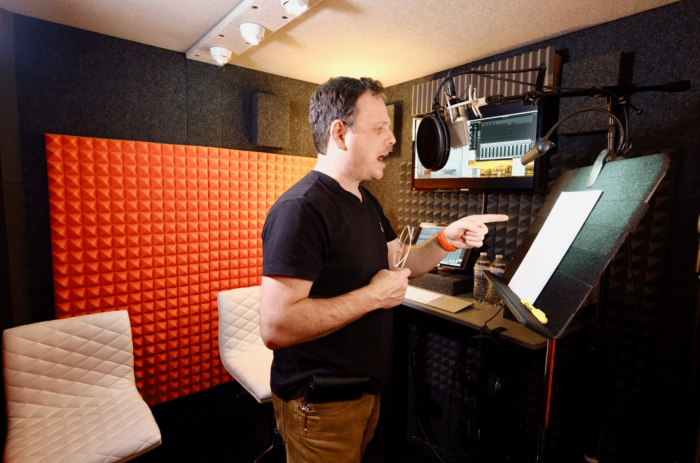
A well-treated vocal booth makes a dramatic difference in the clarity and warmth of a recorded performance.
“The best studio in Edmonton is the one where you feel comfortable enough to take risks and try things — because that’s where the magic happens.”
Step 03 — Understand Studio Pricing in Edmonton
Studio rates in Edmonton vary significantly depending on the size, location, and reputation of the facility. As a rough guide for the current market:
- Budget / home studio$40 – $60 / hr
- Mid-range professional studio$65 – $120 / hr
- Premium / full-service studio$130 – $200+ / hr
- Mixing & mastering (per song)$80 – $250+
Keep in mind that the hourly rate rarely tells the whole story. A faster, more experienced engineer might complete your session in two hours what a cheaper studio takes five hours to accomplish. Total cost, not hourly rate, is the number that matters.
Some studios offer discounted rates for early morning or late-night slots (e.g., 8am–noon or midnight–4am). If your schedule is flexible, these “off-peak” windows can save you 20–30% on your booking.
Step 04 — Prepare Your Material Before the Session
One of the biggest mistakes first-time recording artists make is showing up to the studio unprepared. Studio time is expensive — every minute you spend deciding on an arrangement or learning lyrics is money out of your pocket.
A good rule of thumb: you should be able to perform each song you plan to record 10 times in a row, flawlessly, from memory. If you can’t do that in your bedroom, you won’t be able to do it in the studio, where nerves, headphones, and the pressure of the clock add a whole new layer of difficulty.
Prepare your demos or reference tracks
Even a rough voice-memo demo of each song is incredibly useful for your engineer. It tells them the tempo, the key, the feel you’re going for, and the approximate arrangement. Share these before your session so they can set up the right gear in advance.
Have a tempo map ready
If your songs will be recorded to a click track (which they should be, for flexibility during mixing), know the BPM of each song ahead of time. Your phone’s metronome or a free app like Tempo can help you nail this down during practice.
Step 05 — What to Bring on the Day
Your studio day checklist
- Your instrument(s) — freshly tuned, with new strings/reeds/heads if possible
- All written lyrics and chord charts, printed or on your phone
- Reference tracks (songs that have the sound you’re going for)
- A list of songs in the order you plan to record them
- Spare picks, strings, drum sticks, batteries — whatever you might need
- Water and a light snack (heavy meals make singing harder)
- A notepad for notes and ideas
- A positive attitude and patience — things always take longer than expected
Arrive 10–15 minutes early. This gives you time to set up, warm up your voice or fingers, and settle into the environment before the clock starts running. Most studios in Edmonton will start charging from your booked start time whether you’re there or not.
Step 06 — What Happens During a Session
Here’s a typical flow for a first recording session, so you know what to expect:
Setup and soundcheck (30–60 min). The engineer will position microphones, set levels, and dial in your headphone mix. This is completely normal and is not charged extra at most studios — but confirm this when you book.
Tracking (the bulk of the session). You’ll record your performances, usually one instrument or vocal at a time. The engineer will guide you on headphone levels and may offer feedback on performances. Trust their ears — they’re listening objectively while you’re inside the music.
Comping and rough mix. After tracking, the engineer may do a quick “comp” — stitching together the best takes — and put together a rough mix so you can hear how everything sits together. Don’t mistake the rough mix for the final product; it’s just a reference.
“Great recordings aren’t made in one take — they’re built from the best moments across many attempts. Trust the process.”
Step 07 — After the Session: Mixing & Mastering
Recording is only the first stage. Once your raw tracks are captured, they need to go through mixing (balancing all the instruments and adding effects) and mastering (polishing the final stereo mix so it sounds great on every speaker and streaming platform).
Some Edmonton studios handle all three stages under one roof, which is convenient and ensures a consistent sonic vision. Others specialize in just recording or just mixing/mastering. Ask about this before you book so there are no surprises about scope or cost.
When you receive your mixed and mastered files, make sure you get both the full-quality WAV or AIFF files (for distribution and archiving) and the MP3 versions (for sharing). Keep backups of everything in at least two places.
A Few Final Tips for First-Timers
Don’t overthink perfection. The studio can fix a lot — timing, pitch, even some mistakes — but it can’t fix a performance that lacks feeling. Aim for emotional honesty first, technical precision second.
Ask questions. A good engineer wants you to understand what’s happening. If you don’t understand why they’re doing something, ask. It’s your music and your session.
Book more time than you think you need. First-timers almost always underestimate how long things take. If you think you can record three songs in three hours, book four hours. The extra buffer takes the pressure off and often results in better performances.
Have fun. Making music in a professional studio is a privilege and a joy. Soak it in. The nerves fade after the first take, and what’s left is one of the best experiences a musician can have.
Ready to Book Your Session in Edmonton?
Our studio offers professional recording, mixing, rehearsal space, and beat production — all in one place, right here in YEG.
Book a Session →